
DeWalt Tool Liquidation Pallets: What Buyers Should Know
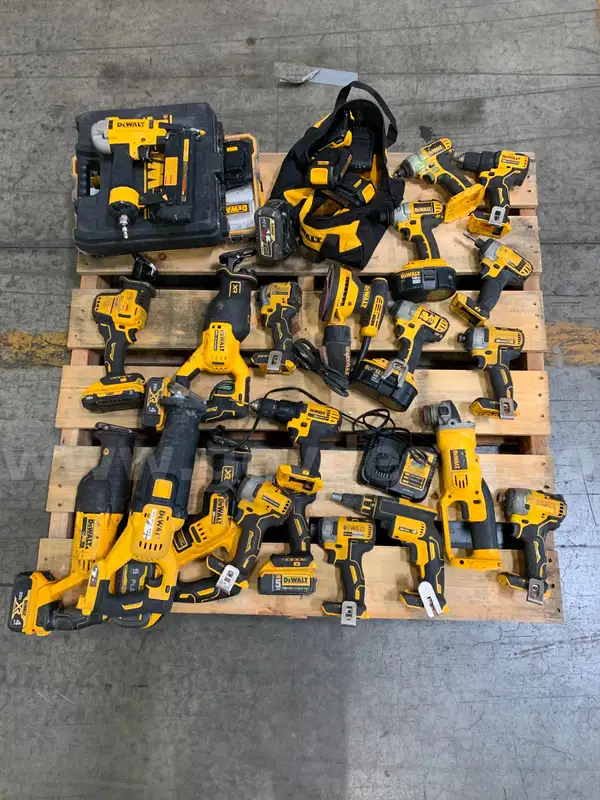
DeWalt tool pallets liquidation refers to bulk lots of brand-name DeWalt tools — sourced from retail returns, overstock, and damaged shipments — sold at steep discounts through liquidation platforms. Buyers use these lots to resell individually for profit, stock small retail stores, or acquire quality tools at a fraction of retail price. Walk into any job site in America and you’ll spot the yellow and black. DeWalt has built a reputation over decades that tradespeople, contractors, and serious DIYers genuinely trust. So when people discover they can get their hands on DeWalt tool pallets through liquidation — bulk loads of brand-name tools at steep discounts — the reaction is usually somewhere between disbelief and excitement. Both reactions are reasonable. The deals are real. But so are the risks if you go in blind. This guide covers how the liquidation market actually works, where to find the best sources, how to evaluate what you’re buying, and how to make the most of every pallet you purchase — whether you’re a first-time buyer or a seasoned reseller. Ready to browse available lots? Visit the tool-pallets.com shop to see current DeWalt inventory. Why DeWalt Is the Brand Everyone Wants in a Liquidation Lot→ Why DeWalt Tool Pallets Liquidation Is the Opportunity Everyone Wants DeWalt consistently ranks among the most resalable tool brands in the liquidation market, thanks to decades of brand loyalty and consistent consumer demand. Not all tool brands are equal when it comes to the resale market. DeWalt sits near the top of the pile, and for good reason. The brand has been around since 1923. DeWalt manufactures everything from cordless drills and circular saws to miter saws, oscillating tools, and full 20V MAX battery systems. More importantly, DeWalt has earned a loyal following — buyers who specifically seek out the brand and don’t want a substitute. That brand loyalty translates directly into resale value. A used DeWalt drill with a battery and charger will consistently sell faster and for more money than a comparable tool from a lesser-known brand. For resellers, that kind of demand shortens the time inventory sits unsold and tightens up the cash flow cycle. When DeWalt tools show up in a liquidation lot, buyers pay attention — and for good reason. How the Liquidation Process Actually Works Where Do Liquidation Tool Pallets Come From? DeWalt liquidation pallets originate from four main sources: retail customer returns, overstock and shelf pulls, insurance and damage claims, and manufacturer surplus. Each source affects the condition grade and resale potential of the lot. Before spending a dollar on a pallet, it helps to understand where these tools are coming from: Retail customer returns. Home Depot, Lowe’s, and other big-box retailers process enormous volumes of customer returns every day. Many items are perfectly functional — returned simply because someone changed their mind or bought the wrong model. Rather than restocking each item individually, retailers bundle returns into pallets and sell them in bulk to liquidators. Overstock and shelf pulls. When a retailer over-orders or discontinues a product line, the excess inventory has to go somewhere. Liquidators buy it at a fraction of cost so the retailer can free up warehouse space. Insurance and damage claims. Shipments damaged in transit are sometimes sold through liquidation channels. The tools inside may be fully functional even if the outer packaging took a hit. Liquidators then sort these goods, grade them by condition, and resell them — often online — to buyers willing to do the work of sorting, testing, and reselling individually. When the product is DeWalt, there’s a ready market waiting on the other end. Where to Find DeWalt Tool Pallets Through Liquidation What Are the Best Platforms for Buying DeWalt Liquidation Pallets? The top platforms for buying DeWalt tool pallets include B-Stock Supply, BULQ, Direct Liquidation, local liquidation warehouses, and wholesale closeout distributors. Each platform differs in pricing model, transparency, and buyer requirements. Sourcing is the skill that separates successful resellers from those who give up after one bad purchase. Here are the main channels worth your time. B-Stock Supply B-Stock is one of the largest B2B liquidation auction platforms in the country. B-Stock works directly with major retailers — including some of the biggest home improvement chains — to auction off returns and overstock pallets. DeWalt-heavy lots surface frequently, and because many manifests are available, buyers can see exactly what they’re bidding on before committing. B-Stock requires a business account to participate, and competition can be stiff for high-quality lots. But the legitimacy of the merchandise is hard to beat. According to B-Stock’s own platform data, buyers can access hundreds of active auctions at any given time. B-Stock is better suited for experienced buyers with business accounts who want access to high-volume, retailer-direct inventory. BULQ works best for first-time buyers who prefer fixed pricing and clear manifests. BULQ BULQ offers a more transparent, fixed-price experience rather than an auction format. BULQ shows buyers the manifest, the condition grade, and an estimated retail value for each pallet. For first-time buyers especially, that clarity is valuable. Inventory rotates frequently, so checking back regularly is part of the strategy. Learn more at bulq.com. Direct Liquidation Direct Liquidation sources directly from large retailers and frequently lists dedicated tool categories where DeWalt pallets surface regularly. The platform offers both auction-style and fixed-price listings, and condition grading tends to be detailed and reliable. Visit directliquidation.com for current inventory. Local Liquidation Warehouses Never overlook what’s close to home. Local liquidation warehouses allow buyers to physically inspect merchandise before purchasing — an enormous advantage when dealing with power tools. On-site inspection makes it possible to check for missing batteries, damaged housings, and frayed cords, all of which are impossible to assess from a photo online. Search for liquidation warehouses in your area, visit a few, and build relationships with the staff. Over time, some buyers get tipped off about incoming DeWalt-heavy pallets before they even hit the floor. Tool-pallets.com also maintains a regularly updated selection of tool liquidation
Buy Milwaukee Tool Pallets
buy milwaukee tool pallets complete guilds : Buying Milwaukee tool pallets gives resellers, contractors, and tool enthusiasts access to professional-grade inventory at wholesale or liquidation prices—significantly below retail. Milwaukee is one of the most in-demand power tool brands globally, making bulk pallet purchases a proven strategy for entering or expanding the tool resale market. Whether you’re sourcing your first pallet or scaling an existing resale operation, this guide covers everything you need to know: what’s included, where to buy, how the process works, and how to maximize your return on investment. Why Buy Milwaukee Tool Pallets? Milwaukee tool pallets are worth buying because they combine high brand demand with significant wholesale savings. Milwaukee is a leading name in the power tool industry, trusted by professionals in construction, automotive, and manufacturing. Their products are engineered for heavy-duty performance and long-lasting reliability—qualities that make them fast-moving inventory for resellers. When you buy Milwaukee tool pallets in bulk, you gain access to high-value inventory at a fraction of retail cost. Pallets typically include a mix of: Power drills and impact drivers Circular saws and reciprocating saws Angle grinders Batteries, chargers, and accessories This broad product mix appeals to a wide customer base—from professional contractors to DIY enthusiasts—making Milwaukee pallets one of the strongest performers in the tool liquidation market. For resellers: Higher profit margins and faster inventory turnover.For personal buyers: Access to premium tools at a fraction of retail cost. What Types of Milwaukee Tool Pallets Are Available? Milwaukee tool pallets come in several conditions, each suited to different budgets and business goals: Milwaukee Tool Returns Pallet – Customer-returned items, untested. Higher risk, but significant savings potential. Milwaukee Overstock Pallets – Surplus new-in-box inventory from excess stock. Manifested Milwaukee Pallets – Pallets with a detailed itemized manifest so you know exactly what you’re buying before purchase. Milwaukee Tool Liquidation Pallet – Mixed-condition pallets sourced from liquidation sales at deep discounts. Grade A Milwaukee Tool Lots – Top-condition items with minimal wear, ideal for resellers who prioritize quality. Mixed Milwaukee & DeWalt Pallet – Multi-brand pallets for buyers looking to diversify their inventory across two premium tool brands. Choosing the right pallet type depends on your risk tolerance, budget, and target resale market. Grade A and manifested pallets are better suited for resellers who want predictable margins, while untested returns pallets work best for experienced buyers who can assess and refurbish items efficiently. Where to Buy Milwaukee Tool Pallets To ensure quality and authenticity, always purchase from trusted wholesale suppliers, liquidation marketplaces, or established pallet distributors. Reliable sources typically offer: Verified inventory listings Detailed pallet manifests Transparent pricing Shipping support and logistics assistance Tool Pallets is a trusted distributor offering a wide range of Milwaukee pallet options at competitive wholesale prices, backed by customer-focused support and transparent listings. You can also explore established liquidation platforms such as B-Stock and Direct Liquidation for additional sourcing options. Avoid unverified sellers or deals that seem too good to be true. Counterfeit or misrepresented products can damage your business reputation and significantly reduce your profit margins. How the Buying Process Works Buying Milwaukee tool pallets is straightforward when you follow the right steps. Step 1: Browse Available Pallets Start by exploring available tool pallets for sale online. Look for detailed descriptions, including product categories, condition grades, and estimated retail value. Step 2: Review the Manifest A pallet manifest provides an itemized overview of what’s included. Manifested pallets remove guesswork and help you calculate potential resale value and gross margin before committing to a purchase. Step 3: Compare Pricing and Condition Pallets vary in condition—new, customer returns, overstock, or refurbished. Select the condition grade that aligns with your budget and resale strategy. Step 4: Place Your Order Once you find the right pallet, place your order through a secure checkout system or directly with a wholesale representative. Step 5: Arrange Shipping Most suppliers offer shipping directly to your location. Tool Pallets provides logistics support to make delivery smooth and efficient. Tips to Maximize Profit from Milwaukee Tool Pallets Getting the best return on investment from a Milwaukee pallet requires more than just buying low. Focus on: Selling high-demand items individually – Power tools such as impact drivers and circular saws command strong prices when listed separately. Bundling accessories – Pairing batteries, chargers, and bit sets into combo listings can increase average order value. Targeting the right buyers – Contractors, tradespeople, and serious DIYers are your highest-value customers. Listing across multiple platforms – Platforms such as eBay, Facebook Marketplace, and Craigslist expand your reach and increase sell-through rates. Starting with manifested pallets – If you’re new to tool resale, manifested Milwaukee pallets reduce uncertainty and make it easier to project profitability. Understanding market demand before you buy is the single most important factor in maximizing margins. Frequently Asked Questions Q: What is a Milwaukee tool pallet?A Milwaukee tool pallet is a bulk lot of Milwaukee-branded tools—including power tools, hand tools, batteries, and accessories—sold together at wholesale or liquidation pricing. Pallets are typically sourced from customer returns, overstock, or closeout sales and are available in various condition grades. Q: Are Milwaukee tool pallets worth buying for resale?Yes, Milwaukee tool pallets are generally well-suited for resale because Milwaukee is a high-demand professional brand with strong consumer recognition. Resellers who source from reliable distributors and sell items individually or in targeted bundles can achieve meaningful profit margins above their pallet cost. Q: What is a pallet manifest, and why does it matter?A pallet manifest is an itemized list of the specific tools and accessories included in a pallet. Buying a manifested Milwaukee pallet allows you to calculate your estimated resale value before purchasing, reducing financial risk compared to blind or unmanifested lots. Q: Can I buy Milwaukee tool pallets near me?Many distributors, including Tool Pallets, offer shipping directly to your location across the USA. Some buyers also find local liquidation vendors by searching platforms like B-Stock or Direct Liquidation for regional inventory. Final Thoughts Buying Milwaukee tool pallets is one of the
Standard Pallet Dimensions For Tool Pallets

The standard pallet dimension for tool pallets is 48 x 40 inches—the most widely used size across North American industries due to its compatibility with forklifts, warehouse racking systems, and freight carriers. This makes it the default choice for wholesale tool sales and tool pallet liquidation. Understanding pallet dimensions is essential when buying tools in bulk. The right size directly affects storage capacity, shipping costs, and overall logistics efficiency—whether you’re a reseller, contractor, or business owner purchasing wholesale tool pallets. What Are the Standard Pallet Dimensions for Tool Pallets? The standard pallet dimension for tool pallets is 48 x 40 inches. According to standards set by the Grocery Manufacturers Association (GMA) and the National Wooden Pallet and Container Association (NWPCA), this size accounts for approximately 30–35% of all pallets in circulation in North America—making it the de facto standard for most commercial applications. Tool pallets are also available in several other standard sizes, each suited to specific industries and load types: Pallet Size Common Industries 48 x 40 inches General wholesale, retail, tool liquidation 48 x 48 inches Industrial equipment, heavy machinery 42 x 42 inches Beverage and chemical industries 40 x 48 inches Automotive, military 36 x 36 inches Telecommunications Knowing which size applies to your industry helps you plan warehouse space, reduce shipping costs, and avoid handling complications when purchasing wholesale tool pallets for sale. Why Do Standard Pallet Dimensions Matter for Tool Buyers? Pallet dimensions directly impact cost, safety, and operational efficiency. For anyone purchasing tool pallets for sale, choosing the correct size matters for the following reasons: Cost savings: Correctly sized pallets reduce wasted space and lower per-unit shipping costs. Storage efficiency: Standard dimensions align with warehouse racking systems, making organization straightforward. Damage prevention: A properly sized pallet reduces the risk of tools shifting or falling during transit. Logistics speed: Uniform pallet sizes streamline loading, unloading, and freight processing. Resale advantage: Resellers who buy liquidation tool pallets benefit from consistent sizing when breaking down and repackaging inventory. Inventory planning: Bulk buyers can accurately forecast storage needs and maximize available floor space. What Types of Tools Are Typically Found on Wholesale Tool Pallets? Wholesale tool pallets typically include a mix of hand tools, power tools, and accessories sourced from surplus stock, overstock, or liquidation sales. Common contents include: Power drills and drivers Wrenches and socket sets Screwdrivers and pliers Outdoor power equipment Specialty and trade tools This variety makes tool pallets attractive for businesses looking to diversify inventory at competitive prices. Resellers can sell tools individually or bundle them into curated packages to increase margins. Browse available options at tool-pallets.com to find pallets suited to your inventory needs—including Gas Blowers Tool Pallets, DeWalt Mix Tool Pallets, and Milwaukee Tool Pallets. How to Choose the Right Pallet Size for Your Needs Selecting the right tool pallet size depends on three factors: your industry, your storage setup, and your shipping carrier’s requirements. Here is a step-by-step approach: Identify your storage constraints: Measure your warehouse or storage area before ordering. Standard 48 x 40-inch pallets fit most commercial racking systems. Check carrier compatibility: Most freight carriers are optimized for 48 x 40-inch pallets. Non-standard sizes may incur additional handling fees. Match size to load type: The 48 x 40-inch pallet is better suited for general wholesale and resale operations, while the 48 x 48-inch pallet works best when handling heavier industrial or machinery loads. Compact telecommunications equipment fits a 36 x 36-inch pallet. Consider resale logistics: If you plan to break down and resell tools from liquidation tool pallets, standard sizing simplifies repackaging and storage. Consult your supplier: When searching for liquidation tool pallets near you, ask suppliers about the specific dimensions of each pallet before purchasing. For further guidance on industry pallet standards, the National Wooden Pallet and Container Association (NWPCA) and the Grocery Manufacturers Association (GMA) publish up-to-date specifications that can help inform your purchasing decisions. For additional liquidation sourcing options, platforms such as B-Stock and Direct Liquidation aggregate wholesale and liquidation inventory from major retailers. Frequently Asked Questions Q: What is the standard pallet dimension used for tool pallet liquidation?A: The standard pallet dimension for tool pallet liquidation is 48 x 40 inches. This size is the most widely used in North America because it is compatible with most forklifts, freight systems, and warehouse racking—making it ideal for wholesale and liquidation tool purchases. Q: Can I buy tool pallets in non-standard sizes?A: Yes. Non-standard pallet sizes such as 42 x 42 inches, 48 x 48 inches, and 36 x 36 inches are available for specialized industries. However, most wholesale tool pallets are sold on the standard 48 x 40-inch size for ease of shipping and storage. Q: How does pallet size affect the cost of buying tools in bulk?A: Pallet size directly affects freight pricing, storage requirements, and handling complexity. Buyers who select standard 48 x 40-inch pallets typically benefit from lower shipping rates, easier storage, and faster processing—reducing the overall cost of bulk tool purchases. Q: Are wholesale tool pallets a good option for resellers?A: Yes. Purchasing wholesale tool pallets allows resellers to acquire a large variety of hand tools and power tools at below-retail prices. Resellers can then sell items individually or in bundles to generate a profit margin. Q: What is the weight capacity of a standard 48 x 40-inch tool pallet?A: A standard wooden 48 x 40-inch pallet typically supports a static load of up to 3,000 lbs and a dynamic load of up to 1,000–1,500 lbs, depending on construction grade. Always verify load ratings with your supplier before purchasing heavy tool pallets. Q: Where can I buy wholesale tool pallets online?A: Wholesale tool pallets are available through liquidation marketplaces and specialized retailers. Tool-pallets.com offers a wide selection—including Home Depot Tool Pallets, Mixed Outdoor Tool Pallets, and Bulk Rigid Tool Pallets—at competitive wholesale prices. Additional sourcing options include B-Stock and Direct Liquidation, which aggregate liquidation inventory from major retailers. Q: How do I verify the dimensions of a tool pallet before purchasing?A: