So you’ve heard the buzz about liquidation tool pallets . Maybe you caught someone on TikTok unboxing a pallet of Milwaukee drills they snagged for a few hundred bucks, or a friend mentioned they’ve been flipping power tools on eBay and making a surprisingly decent living at it. Whatever brought you here, you’re probably wondering the same thing everyone wonders at the start: Is this actually legit, or is it too good to be true?
Honest answer? It’s both. And that’s exactly why this guide exists.
What Are Liquidation Tool Pallets, Exactly?
Let’s start with the basics, because there’s a lot of confusion floating around about this.
When big retailers — think Home Depot, Lowe’s, Walmart, Amazon — end up with excess inventory they can’t move, they don’t just toss it. Customer returns pile up. Overstock from seasonal pushes sits in warehouses. Shelf pulls happen when a product gets discontinued or rebranded. All of that merchandise has to go somewhere.
So they sell it. In bulk. On pallets.
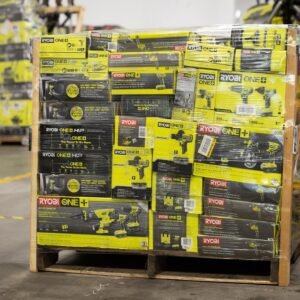
A liquidation tool pallet is essentially a wooden skid stacked with power tools, hand tools, accessories, batteries, chargers — whatever the retailer is offloading — wrapped up and sold to a liquidation company or directly to buyers at a steep discount. We’re talking sometimes 10 to 30 cents on the dollar compared to retail prices.
The tools can be anything from DeWalt circular saws and Milwaukee impact drivers to Ryobi combo kits and Black+Decker basics. Condition varies — some items are brand new, never touched. Others are open-box or customer returns that may need a little TLC. And some are just straight-up duds that nobody wants.
That mix is the whole game. Knowing how to play it is what separates smart buyers from people who got burned.
Why Tool Pallets Specifically? (Not Just Any Pallet)
Good question. You could buy a pallet of clothing, perfume, electronics — anything. So why tools?
A few reasons, and they’re pretty compelling.
Tools hold their value. A name-brand power tool from Milwaukee, DeWalt, or Makita doesn’t depreciate the way a smartphone does. A drill that retailed for $180 two years ago still sells for close to that today. That price stability is a massive advantage when you’re reselling.
Demand is consistent. Contractors need tools. DIYers need tools. People moving into new homes need tools. The market doesn’t evaporate when a trend dies or a season ends. There’s always someone in the market for a good deal on a quality tool.
Brand recognition does the selling for you. List a Milwaukee M18 kit on Facebook Marketplace or eBay and the brand name alone draws clicks. You don’t have to convince anyone that Milwaukee makes quality tools — they already know.
That said, tools also have some specific quirks you need to understand before you start spending money.
The Different Types of Tool Pallets You’ll Encounter
Not every pallet is the same, and the type of pallet you buy dramatically affects your risk and your return. Here’s a quick breakdown:
Overstock pallets are the crown jewel. These are brand-new, untouched items — tools that simply didn’t sell fast enough and got cleared out to make room. Manufacturers overproduce, retailers overbuy, and suddenly perfectly good merchandise needs an exit. These pallets tend to have the best margins.
Shelf-pull pallets are also pretty great. The products have never been bought — they were just pulled from the shelf, maybe because of a packaging update, a planogram change, or the end of a product line. Usually in excellent condition.
Customer return pallets are the wild card. Some returns come back in perfect condition because the buyer changed their mind. Others come back missing parts, with broken components, or just dead on arrival. When you buy a return pallet, you’re buying a mystery box — and that unpredictability is baked into the price.
Salvage pallets are for experienced buyers only. These are damaged, heavily used, or non-functional items. The price is low for a reason. Unless you know how to test, repair, and part out tools, these are more headache than they’re worth for beginners.
Where to Buy Liquidation Tool Pallets in the USA
This is where most guides just slap a list of websites together and call it a day. We’re going to actually explain what each source is like to work with, because the source matters enormously.
B-Stock Supply
B-Stock is one of the most well-known auction platforms in the liquidation world, and it’s used directly by major retailers. If you want Home Depot’s returned merchandise, B-Stock is one of the main channels they use to move it. The upside is authenticity — you know exactly who the source is. The downside is competition. Auctions can get heated, especially on high-value tool lots, and some listings are for 16 to 30 pallets at a time, meaning you could be bidding on an order worth well over $100,000.
Great for established buyers. Maybe not the first stop if you’re just getting started.
Liquidation.com
One of the OG platforms in the space. You’ll find all kinds of tool lots here across multiple categories, including home improvement, power tools, and general hardware. You need to create an account and get verified before you can bid. Shipping can take up to 12 business days in some cases. Manifests are generally available, which is a huge plus.
Direct Liquidation
Direct Liquidation has gone through some updates recently — better tracking, easier offer options, and shipping protection have all been added. Tool pallets pop up regularly. One thing to note: many pallets are listed as “untested,” meaning nobody has checked whether the items actually work. Price accordingly.
Half Off Wholesale (HalfOffVIP)
This one is more of a specialty play — they specifically deal in home improvement and tool pallets, including power nailers, chain saws, generators, circular saws, and more. If you’re serious about tools as a niche, it’s worth keeping an eye on their inventory. They rotate stock regularly.
Local Liquidation Warehouses
Don’t overlook these. Many medium-sized cities across the US have local liquidation operations that barely advertise online. Search Google Maps for “liquidation warehouse” combined with your city name, and you might be surprised what pops up. The advantage of buying locally is massive: you can physically inspect the pallet before you hand over any money, you avoid freight costs (which can run $150–$300+ per pallet depending on your location), and you can build a real relationship with a supplier who’ll tip you off when good tool lots come in.
What Does a Tool Pallet Actually Cost?
Pricing varies a lot based on what’s on the pallet and where you’re buying it. As a general guide for 2025:
- Smaller mixed tool pallets: $200–$600
- Mid-range pallets with name-brand tools: $600–$1,500
- Premium manifested pallets (Milwaukee, DeWalt heavy): $1,500–$5,000+
Freight shipping, if you’re ordering online and don’t have a forklift or loading dock, adds anywhere from $150 to $400 on top of that.
The key metric isn’t the purchase price — it’s the recovery rate. If you buy a pallet with a total retail value of $4,000 and you paid $800 for it, and you can realistically resell it all for $2,800 after time and effort, that’s a solid result. Work backwards from what you can actually sell, not what the sticker prices say.
The Manifest: Your Most Important Document
Experienced liquidation buyers treat the manifest like a sacred text. It should be.
A manifest is an itemized list of everything on the pallet — product names, UPCs, quantities, and condition grades. A good manifest tells you exactly what you’re getting before the pallet ever arrives at your door.
If a seller can’t or won’t provide a manifest, that’s a red flag. Not necessarily a dealbreaker if the price is low enough, but a flag. Some sellers list pallets with estimated contents or general categories — “assorted power tools, mixed brands” — which gives you almost nothing to work with.
One thing worth knowing: even manifested pallets can have up to a 15% inaccuracy rate, meaning some items listed might not actually be there, or extras might be swapped in. Factor that into your calculations.
How to Actually Make Money Reselling Tool Pallets
Buying the pallet is the easy part. Here’s where the real work starts.
Sort and assess everything first. When your pallet arrives, go through every single item before you do anything else. Test tools where you can. Photograph everything. Make a list of what you have, what condition it’s in, and what it might sell for.
Know your selling platforms. eBay is excellent for name-brand tools — buyers trust the platform, and you can reach the entire country. Facebook Marketplace is great for larger, heavier items where local pickup makes sense and you avoid shipping headaches. Amazon FBA works well for new or like-new items with clean UPCs, though you’ll need to understand their fees and policies for reselling. For bulk lots you want to move fast, selling to another reseller wholesale is always an option — lower margin, but immediate cash.
Price to move. The biggest mistake new pallet flippers make is getting attached to retail prices. Your job is to move inventory, not to get top dollar on every single item. List competitively, especially to start. You’d rather sell 90% of a pallet at a modest margin than have half of it gathering dust for six months.
Watch your costs. It’s easy to focus on the buy price and forget everything else. Freight costs eat into margins fast. Listing fees, shipping materials, your own time — it all adds up. Keep a simple spreadsheet from day one. Know your actual cost per item and your actual selling price. That’s the only way to know if you’re actually making money.
Mistakes That’ll Cost You (Learn These the Easy Way)
A few patterns come up again and again among buyers who got burned:
Buying without a manifest from an unknown seller. There are sellers out there who will pack a pallet with junk and call it “mixed power tools.” Without a manifest and without reputation checks, you have no protection.
Ignoring freight costs. A $400 pallet with $350 in freight is a very different deal from a $400 pallet you can pick up locally.
Overestimating condition. “Customer returns” doesn’t mean “barely used.” It can mean anything. Start conservative in your resale estimates.
Going too big too soon. Try one pallet. Get through the whole process — buy, receive, sort, list, sell. Then scale. Buying a truckload before you’ve ever moved a single pallet is how people end up with a garage full of stuff they can’t sell.
Buying from someone who promises ridiculous returns. If an ad says something like “pallet worth $10,000 for only $200,” it’s a scam. Full stop. The liquidation market has real margins, but not those kinds of margins.
Is It Worth It in 2025?
Yeah, genuinely. The resale market for tools is strong, and liquidation tool pallets remain one of the more reliable ways to source quality inventory at prices that leave room for profit. Resellers consistently report recovery rates of 2x to 3x their purchase price when buying from reputable sources and selling strategically.
That said, it’s not passive income. You’re sorting, testing, listing, photographing, packing, shipping, and answering buyer questions. It’s a business, and it takes work like any business does.
The people who thrive at it are the ones who treat it seriously — build relationships with reliable suppliers, know their selling platforms inside and out, track their numbers obsessively, and stay patient enough to sell things at the right price instead of panic-selling at a loss.
Start small, learn fast, and scale what works. That’s the whole playbook.
Quick Reference: Top Sources for Liquidation Tool Pallets in the USA
| Source | Best For | Notes |
|---|---|---|
| B-Stock Supply | Authentic big-box retail lots | Competitive auctions, large minimums |
| Liquidation.com | Broad tool category selection | Must verify account to bid |
| Direct Liquidation | Regular tool pallet availability | Many lots listed as “untested” |
| Half Off Wholesale | Tool-specific pallets | Specializes in home improvement |
| Local warehouses | In-person inspection, no freight | Search Google Maps by city |
Whether you’re a seasoned reseller looking to diversify your sourcing or someone just dipping their toes in, liquidation tool pallets in the USA offer a real opportunity. The key is going in with clear eyes — understanding what you’re buying, who you’re buying from, and exactly how you plan to move the merchandise once it arrives. Do that, and the numbers can work out very nicely indeed. visite:tool-pallets.com
