
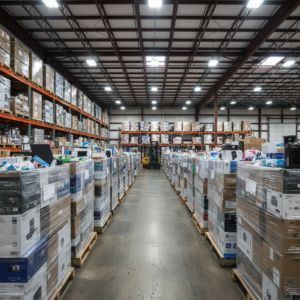
 —especially Amazon return pallets—are often marketed as a “buy low, sell high” opportunity. Social media makes it look like easy money. But the reality is far more complex.Are Liquidation Pallets Worth Buying?
This guide breaks down the real costs, risks, and profits so you can decide whether liquidation pallets are actually worth it.
What Are Liquidation Pallets?
Liquidation pallets are bulk lots of returned, overstock, or unsold items sold at a discount—often 10–30% of retail value �
These pallets can contain:
Electronics
Clothing
Home goods
Tools
Mixed random items
But here’s the catch: you’re buying uncertainty.
The Real Cost Breakdown
Most beginners think the pallet price is the total cost—but it’s not.
Example of a Typical Pallet Investment:
Pallet purchase: $300–$500
Shipping: $100–$200
Platform fees: 10–15%
Total investment: ~$500–$700
Now add:
Storage costs
Repair/replacement costs
Unsellable items
👉 Real cost is often 30–70% higher than expected
What You Actually Get (Reality vs Expectation)
A typical Amazon return pallet contains:
50–60% sellable items
10–20% minor issues
5–10% need repair
Real Profit Margins (Not YouTube Hype)
Let’s break down realistic numbers:
Case Study:
Investment: $500
Total sales: ~$800–$1,200
Net profit: ~$75–$125
👉 That’s only 15–25% profit margin �
The Bin Store Liquidation Store
In some cases, people even lose money:
One example resulted in a $145 loss after expenses �
The Bin Store Liquidation Store
⏳ The Hidden Cost: Time
Most people ignore this:
Sorting: 5–10 hours
Testing: 5–10 hours
Listing & selling: ongoing
👉 Total: 15–20 hours per pallet �
The Bin Store Liquidation Store
When you calculate hourly earnings, many beginners make less than minimum wage.
⚠️ Why Most Beginners Fail
Statistics show:
Around 70% of new resellers quit within a year �
Bin Store Map
Common reasons:
Overestimating product value
Underestimating damage rate
Buying from unreliable sellers
No selling strategy
💡 When Liquidation Pallets ARE Worth It
They can be profitable if you:
✔ Have Experience
Know product values
Understand resale platforms
✔ Specialize in a Niche
Electronics repair
Clothing resale
Tools or furniture
✔ Buy Smart
With manifest (item list)
From trusted suppliers
At ≤30% of retail value
✔ Have Selling Channels
eBay
Facebook Marketplace
Local shop or warehouse
Successful resellers treat this as a business, not a gamble.
When They Are NOT Worth It
Avoid liquidation pallets if:
You expect quick profit
You don’t have storage space
You can’t repair/test items
You don’t know resale pricing
👉 In these cases, it becomes high-risk gambling, not business
🧠 Real-World Insight (From Resellers)
From online reseller communities:
“Some pallets are great, others mostly damaged… it’s a mixed experience.” �
👉 The common theme: unpredictability
⚖️ Final Verdict: Are They Worth It?
👍 YES — If:
You have experience
You treat it like a business
You accept risk
👎 NO — If:
You’re a beginner expecting easy money
You don’t calculate full costs
Conclusion
Liquidation pallets are not a scam—but they are not easy profit either.
They sit in the middle:
Higher risk than normal reselling
Potentially higher reward
But require time, skill, and patience. visit:tool-pallets.com
